How should you navigate the Brampton housing market?
Short April 2026 snapshot of the Brampton housing market plus a six-step checklist for buyers and sellers: shortlist, CMA, finance, offer, negotiate, close.

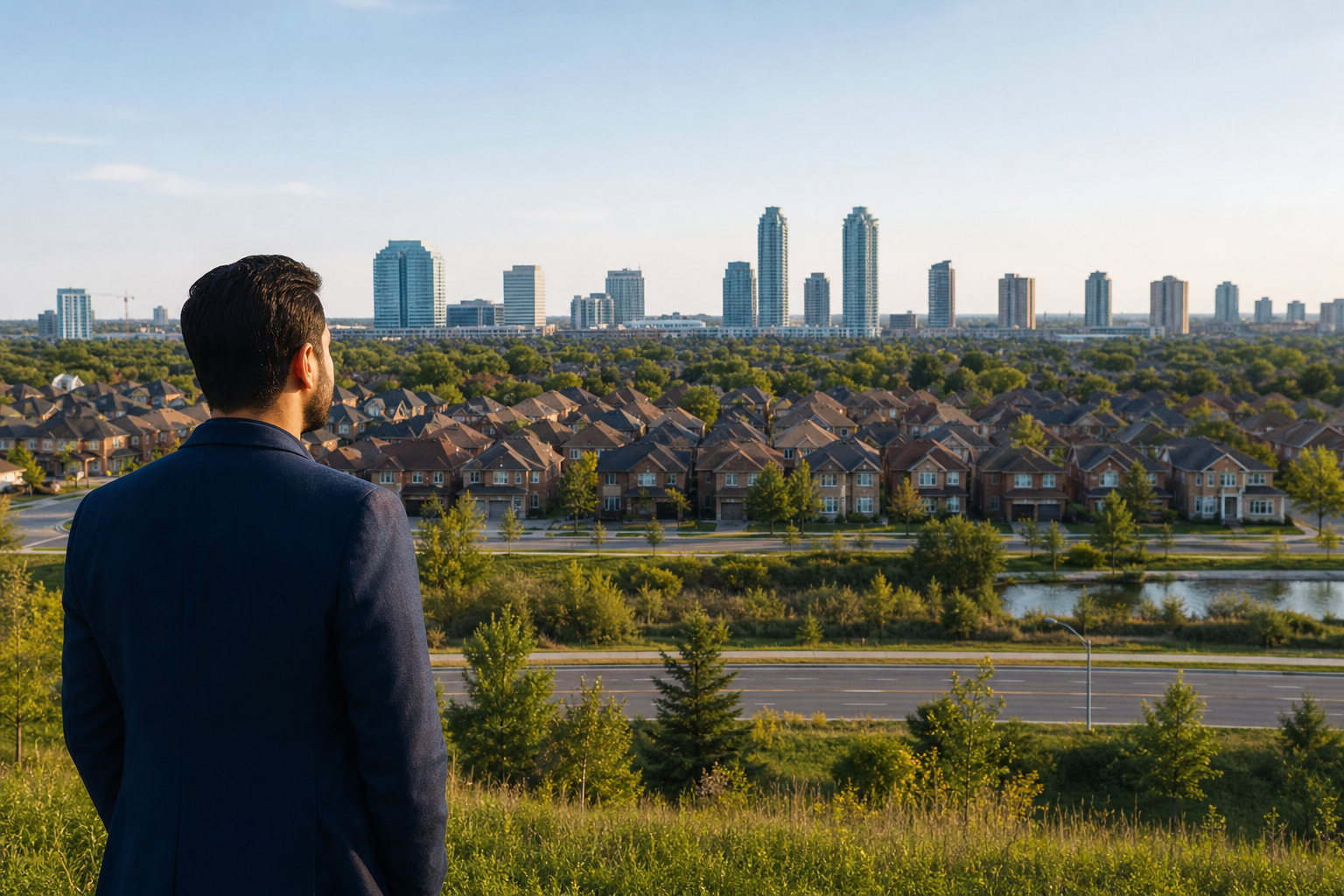
How should you navigate the Brampton housing market?
What the Brampton housing market looks like now: April 2026 snapshot
Before you shortlist or price a property, set expectations with the most recent local data. In April 2026 Brampton recorded 406 total sales. Average sold prices that month were about $1,018,564 for detached homes, $804,242 for semi-detached homes, and $767,488 for freehold townhouses. Use these per-type averages to anchor initial offer or listing ranges, then refine them with local comparables and condition adjustments (source: Brampton market report).
Key takeaway: prices remain neighbourhood-specific. Treat the per-type averages as a starting band and always compare three recent solds in the immediate neighbourhood before acting. homesalebrampton.ca Brampton report
Step 1: Decide whether to act now or wait — match timing to your goals
Clarify your objective and flexibility first. If you must move for work or family reasons, prioritise speed and readiness. If you can wait, use the time to test interest and refine price expectations. Use these local signals to choose timing:
- Inventory and new listings, because rising inventory gives buyers more choice and falling inventory favours sellers.
- Days on market and recent solds, since longer days on market typically allow sellers more pricing latitude while short days on market suggest competitive offers are needed.
- Neighbourhood differences, because some Brampton pockets move faster than others even within the same month.
If you need neighbourhood-level context to choose timing, see the Brampton community page for live listings and micro-market guidance. brampton
Step 2: Shortlist neighbourhoods and property types the Brampton market supports

Shortlisting should be repeatable and data-driven. Follow this three-part micro-process to narrow choices to a workable viewing list.
(a) Set your must-haves and deal-breakers
Write a concise list of non-negotiables such as minimum bedrooms, lot size, transit access, school catchment, or main-floor accessibility. Rank them so you can trade lower-priority features without losing sight of core needs.
(b) Run live MLS filters
Use a live MLS/IDX search to filter the exact property type, price band, and neighbourhoods you selected. Live feeds show active inventory and new listings, which matters in parts of Brampton that receive multiple offers within days. Sankalp Marwaha Real Estate provides live MLS search and community pages that let you compare active listings side by side. the official website
(c) Compare three recent solds per candidate property
For each property you like, pull three sales from the same street or a nearby block completed in the last three to six months. Compare lot size, finished area, visible upgrades, and days on market. If those solds sit within your budget and match your needs, add the property to your viewing shortlist.
Step 3: Get finance and contingency readiness — pre-approval and inspection strategy
Being offer-ready is essential in competitive Brampton segments. Complete these items before you write an offer:
- Mortgage pre-approval showing a specific borrowing limit and, where possible, a rate hold period.
- Proof of funds for deposit and closing adjustments, such as bank statements or a bank letter.
- An inspection plan that balances speed and protection: decide whether to include a home inspection condition or a shortened inspection window. In faster neighbourhoods, a shorter inspection window strengthens offers but increases buyer risk. You can reduce that risk by pre-booking inspectors and preparing a targeted checklist focused on structure, major systems, and obvious moisture issues.
Decision criteria for conditional versus unconditional offers: pick conditional offers if you need protection and are not in a must-win situation. Choose stronger, less conditional offers when inventory is tight and the home meets most of your must-haves.
Step 4: Order a comparable-backed valuation (CMA) before you set price or make an offer
A CMA uses recent solds, neighbourhood adjustments, lot size, and visible upgrades to produce a defensible price band. Order a CMA when you have two or three shortlisted properties and before you write an offer or set a listing price. A well-prepared CMA will:
- List three to six comparables with sale prices and sale dates.
- Explain adjustments for lot size, finished basements, major renovations, and location within the neighbourhood.
- Provide a suggested listing or offer range and a recommended negotiation margin.
What to expect: a CMA delivery typically includes a short write-up, a comparable data table, and an agent recommendation. Use the CMA to set a primary offer or list price, plus a maximum walk-away threshold. Sankalp Marwaha Real Estate offers comparable-backed valuations as part of buyer representation and seller preparation. the official website
Step 5: Craft the offer or listing strategy that fits Brampton conditions

Use separate, stepwise checklists for buyers and sellers so decisions are decisive and defensible.
Buyers: offer checklist
- Use the CMA to set a primary offer price and a fallback price, and document clear escalation triggers if you will increase the offer.
- Decide deposit amount and timing to signal seriousness to the seller.
- Limit conditions when you must be competitive, but keep essential protections such as financing and a targeted inspection when necessary.
- Consider a brief cover letter when the seller values buyer fit, but do not rely on emotion to justify overpaying.
Sellers: listing and negotiation checklist
- Set a pricing band from the CMA that balances initial attraction and room to negotiate.
- Plan a showing schedule that concentrates viewings early in the listing period to capture first-week demand.
- Specify which conditions you will accept and how you will evaluate multiple offers, for example prioritising closing certainty over nominally higher offers with weak financing.
- Consider a quick pre-listing inspection of major systems to reduce surprises during negotiations.
Step 6: Negotiate, close, and minimise last-minute issues
Negotiation and closing move quickly. Keep these steps in order during counteroffers and the closing period:
- Respond to counteroffers with a clear priority list, typically price, closing date, and condition removal.
- Manage deposits and condition removal deadlines carefully, and ensure your lawyer has instructions and funds ready for closing adjustments.
- Arrange final utilities, closing transfers, and a final walkthrough at least a few days before closing.
Common buyer concerns and practical responses:
- I fear overpaying — rely on the CMA and set a maximum walk-away price before writing the offer.
- I need more time — offer a conditional purchase with specific, short condition windows to keep the offer viable while protecting yourself.
- I want fewer contingencies — offset risk with a larger deposit or a slightly lower offer price.
Where to find live Brampton MLS listings and how Sankalp Marwaha Real Estate can help
Use live MLS/IDX searches to see active listings and new entries in real time. Sankalp Marwaha Real Estate combines live MLS listings, recent sold context, and neighbourhood guidance to help buyers and sellers make confident decisions. The practice supports shortlisting, comparable-backed valuations, and offer strategy consultations tailored to Brampton and the Greater Toronto Area. the official website
For neighbourhood-level pages and curated Brampton sold comparables, start with the Brampton community page for local listings and context. brampton
If you choose a consultation, expect a focused 30 to 45 minute session that reviews your shortlist, a CMA for one property of highest interest, and a recommended next step such as a viewing schedule or a draft offer strategy.
Frequently asked questions
What are typical Brampton prices by home type right now?
Use April 2026 figures as a reference: detached homes averaged about $1,018,564, semi-detached about $804,242, and freehold townhouses about $767,488, with 406 total sales that month. These numbers are a starting band; always confirm with a local CMA tied to the specific neighbourhood and block. homesalebrampton.ca Brampton report
How competitive was the Brampton market for buyers in April 2026?
Competitiveness varies by neighbourhood and property type. Some segments see quick offers and multiple bidders while others allow more negotiation room. The most reliable way to know is to review active MLS inventory, days on market for similar homes, and recent solds in the immediate area.
When should I request a CMA in the Brampton buying or selling process?
Request a CMA as soon as you have two to three shortlisted properties if you are buying, or before you set a listing price if you are selling. A CMA gives a defensible price band and recommended negotiation margins so you do not rely on guesswork.
How do neighbourhoods inside Brampton differ when shortlisting homes?
Neighbourhood differences include lot size patterns, typical home age and condition, proximity to transit and highways, and school catchments. These factors affect demand and price sensitivity, so weigh them against your must-haves and use local solds to compare directly.
What documents and financial checks make an offer more competitive in Brampton?
Submit a mortgage pre-approval, proof of funds for the deposit, and a clear deposit schedule. Shortening condition windows, increasing deposit size, and demonstrating readiness to close on the seller's timeline often improve competitiveness.
If you are ready for a comparable-backed valuation or a shortlisting and offer strategy session for Brampton, contact Sankalp Marwaha Real Estate to request a CMA or book a consultation. Sankalp Marwaha Real Estate
Written by
Sankalp Marwaha Real Estate