Compare Toronto homes for sale: condos vs townhouses vs detached
Compare Toronto homes for sale: condos, townhouses, semis, and detached. Use budget, commuting, carrying costs, CMA data, and a viewing checklist.

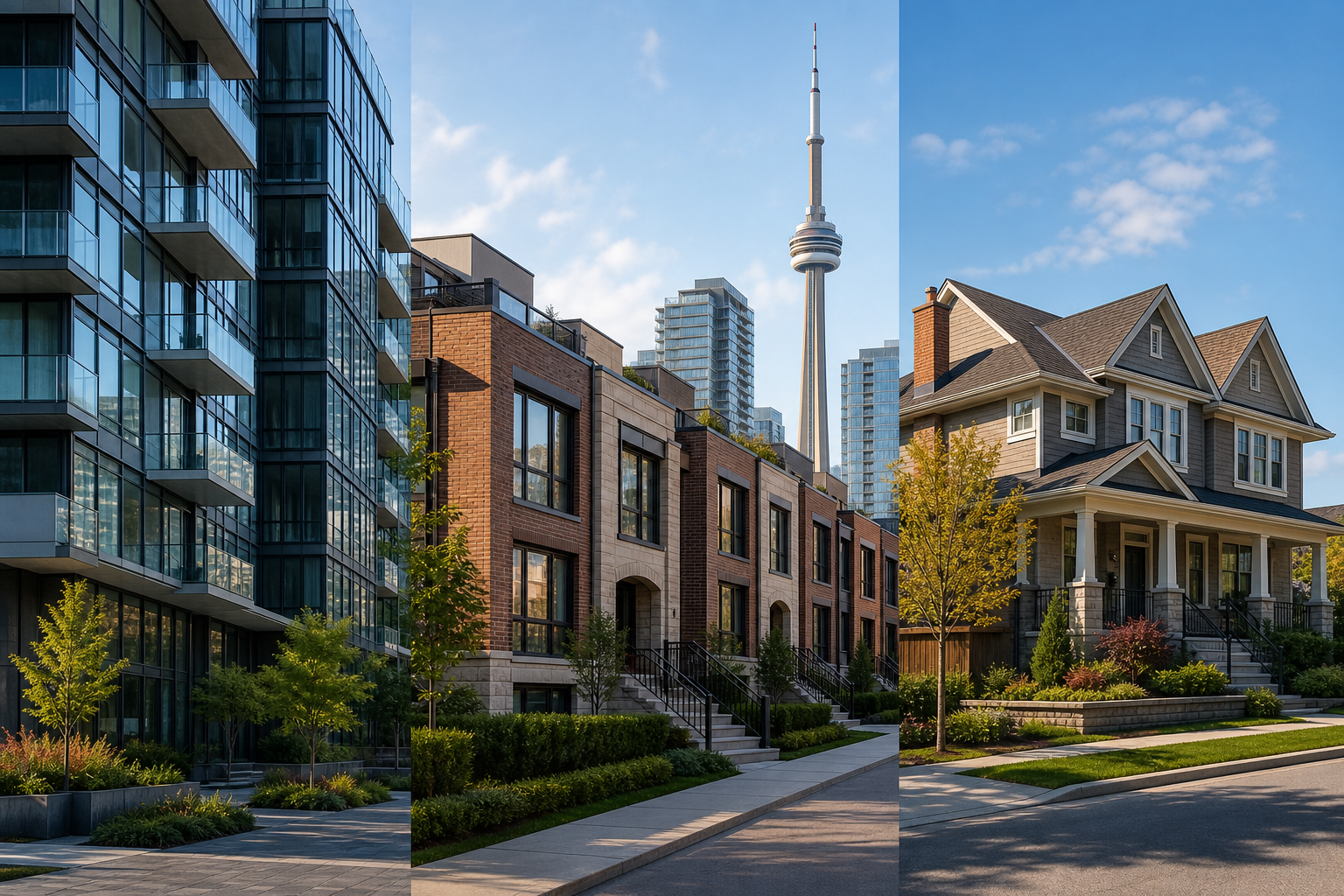
Compare Toronto homes for sale: condos vs townhouses vs detached
When you search Toronto homes for sale you face two simultaneous choices: which property type fits your monthly budget and which neighbourhood will deliver the lifestyle and resale potential you want. This article compares the most common property types in Toronto and the GTA, gives practical shortlisting tools, explains how comparable-backed valuations and live MLS listings refine offers, and shows how to choose a buyer agent who knows your neighbourhood.
Decide what matters first: budget, lifestyle and resale
Most buyers start with a budget, but budget alone should not be the only filter. Translate mortgage pre-approval into a clear property-type target, then layer lifestyle priorities such as commute, schools, and outdoor space. Doing this early helps avoid chasing a detached house when your budget and goals point to a condo or townhouse instead.
How to translate mortgage pre-approval into a property type
Get mortgage pre-approval before you shop. A pre-approval shows the top purchase price your lender will support and clarifies down payment requirements and monthly payment expectations. For a primer on these first steps, see the walkthrough from GetAdvantage on getting started with buying in Toronto What Are the First Steps to Buying a Home in Toronto?.
Prioritise commute and schools
Map commute time and school catchment area before narrowing listings. A slightly longer commute can be worth a lower purchase price, but it may cost you more time and transit expenses over years. Decide which factor you will not compromise on, then use neighbourhood pages and live MLS filters to keep search results focused.
Resale signals in Toronto neighbourhoods
Resale-friendly signals include proximity to transit, high-quality schools, stable employment nodes, and streets with limited new-build approvals. If resale matters, weigh those neighbourhood signals against your immediate lifestyle needs.
Property type comparison: condos, townhouses, semis and detached
Toronto listings commonly show condo apartments, condo townhouses, freehold townhouses, semi-detached houses, and detached houses. Each category has tradeoffs in purchase price, monthly costs, maintenance, privacy, and resale flexibility. The GTA buyer guides explain how each property type changes affordability and ongoing costs and why the choice matters for long-term value GTA Home Buyer's Guide 2026.
Condo apartment: pros and cons
- Pros: Lower entry price, little exterior maintenance, built-in amenities, central locations.
- Cons: Monthly condo fees, limited private outdoor space, exposure to reserve fund health and special assessments.
- Best for: First-time buyers, downtown commuters, investors seeking rental-ready units.
Condo townhouse and freehold townhouse: pros and cons
- Pros: More living space and sometimes small yards, often better value per square foot than apartments, less intensive maintenance than detached properties.
- Cons: Condo-style townhouses carry fees; freehold townhouses mean exterior maintenance responsibilities.
- Best for: Buyers needing space without detached pricing, families prioritising schools but not large yards.
Semi-detached and detached: pros and cons
- Pros: More privacy, larger lots or yards, and stronger long-term appeal in many neighbourhoods.
- Cons: Higher purchase price, higher property taxes, and full responsibility for maintenance and repairs.
- Best for: Families needing space, buyers prioritising private outdoor living, long-term owners focused on neighbourhood value.
Upfront and monthly costs every buyer should compare

List price on MLS is only part of affordability. Compare deposit schedules, down payment requirements, mortgage principal and interest, property taxes, insurance, utilities, condo fees, and a budget for maintenance. Guides on what to check in a Toronto home visit also note legal and closing fees you must budget for when making an offer The Ultimate Home Buying Checklist.
How to estimate monthly carrying costs
- Start with your mortgage payment using the pre-approved rate and amortization you were quoted.
- Add condo fees if applicable, plus property taxes and an insurance quote for the unit or home.
- Estimate utilities, routine maintenance, and a contingency for one-off repairs or special assessments.
Hidden or one-off expenses to budget for
Include legal fees, land transfer tax where applicable, closing adjustments, and a home inspection fee. For older houses check potential upgrades such as electrical panel replacement, insulation work, or a new roof which can add significant short-term cost.
Shortlisting and the viewing checklist every Toronto buyer needs
Shortlisting converts the abstract into three to six homes you can compare side by side. Use a compact viewing checklist to capture facts at each showing. Toronto checklists focus on condition, building systems, and likely additional costs you should note during viewings what to look for when buying a house in Toronto.
Exterior and curb appeal
- Roof condition and visible drainage, driveway and grading, and obvious structural cracks.
- Street character, parking availability, and adjacent land uses that might change in future.
Interior layout and livability
- Room sizes and natural light, storage, and usable flow for your daily routine.
- Noise levels and privacy between rooms or neighbouring units.
Mechanical systems and major repairs
- Age and condition of the furnace, hot water tank, HVAC, windows, and any visible moisture or mould signs.
- Note upgrades you are likely to face in the first five years.
Condo-specific checks: status certificate and reserve fund
For condo purchases request the status certificate early. It shows reserve fund health, any pending litigation, and special assessments that could affect future costs. Use a neighbourhood deep-dive such as the site’s downtown Toronto page when evaluating central listings downtown Toronto.
Neighbourhood checks: transit, schools, development plans
Check transit options and school catchments, then search municipal planning notices for upcoming development that might change traffic, density, or amenities. Local factors matter for day-to-day life and future resale.
How to use comparable-backed valuations and GTA MLS listings to set an offer

A comparable market analysis or CMA pulls recent sold comparables, current active listings, and local market velocity to suggest a defensible offer range. Use live MLS or IDX search to see current supply and how fast similar listings are selling. Sankalp Marwaha Real Estate offers live MLS listings and comparable-backed valuation conversations to help buyers set offers from data rather than guesswork Sankalp Marwaha Real Estate.
What a CMA includes
A CMA lists recent sold prices for similar properties, compares list-to-sold adjustments, shows days on market, and applies adjustments for condition, upgrades, lot size, and location. The result is a defensible range you can justify to a seller and to your lender when necessary.
Documents and listing data to bring to your agent
- MLS listing links or printouts for each shortlisted property.
- Details on comparable sold homes you consider similar, plus your pre-approval and desired closing timeline.
How active versus sold listings change your offer strategy
Active listings show current competition and pricing expectations. Sold listings show what buyers actually paid. In fast micro-markets you may lean more heavily on the most recent sold data, while in slower markets you may weigh condition and days on market more heavily.
How to choose a buyer agent who knows your Toronto neighbourhood
Choose an agent with verifiable neighbourhood transaction history, a written plan for search and negotiation, and transparent service levels. The Connect guide on choosing a top realtor recommends checking recent, local transactions and a clear marketing or negotiation plan when you evaluate agents How to Choose a Top Realtor. For buyer protections and agent selection basics see consumer guidance from the Real Estate Council of Ontario Information for buyers.
Questions to ask at first contact
- Can you show recent sales you handled in my target neighbourhood?
- What is your written plan for shortlisting, viewing, and negotiating on my behalf?
- How will we communicate and how often will you update me?
Red flags and common objections
Be wary of agents who cannot name local recent transactions, refuse to provide a clear search or negotiation plan, or who push flat-fee options without explaining services. Transparent references and a neighbourhood focus matter for high-intent buyers.
Decision matrix and persona-specific checklists for shortlisting homes
Use a simple scoring matrix to compare three to six shortlisted homes across identical fields. Assign 1 to 5 points per field and total them to rank candidates objectively.
Scoring template fields
- Price versus budget
- Monthly carrying cost
- Commute time
- School fit or family amenities
- Condition and near-term repairs
- Resale signals
- Overall livability
Sample scoring and when to walk away
Score each property and treat totals as a guide rather than an absolute. Walk away when multiple red flags appear on inspection, when the condo status certificate shows unhealthy reserves, or when financing cannot cover expected costs even after negotiation.
Next steps: start a live MLS search or request a free CMA
If you are ready to compare actual Toronto homes for sale, use live MLS filters to save and shortlist properties, or request a comparable-backed valuation and neighbourhood consultation to refine your offer strategy. Sankalp Marwaha Real Estate offers live MLS search and CMA conversations to help buyers turn shortlists into confident offers Sankalp Marwaha Real Estate. Prepare your pre-approval, the MLS links for three shortlisted homes, and any renovation or inspection concerns before the valuation appointment.
FAQ
What is the easiest way to start searching Toronto homes for sale with current listings
Begin with mortgage pre-approval, then use a live MLS or IDX search to filter by neighbourhood, property type, and budget. A live MLS feed ensures you see current inventory rather than delayed portal results; Sankalp Marwaha Real Estate provides this live search for the GTA live MLS search.
How do condo fees affect my monthly budget compared with a detached home
Condo fees cover shared maintenance, amenities, and often some utilities. They reduce individual maintenance work but add a regular monthly cost. Compare condo fees plus mortgage against mortgage, utilities, and maintenance for a detached home to judge total monthly carrying costs.
What should I bring to a CMA or valuation appointment to set an offer confidently
Bring your mortgage pre-approval, links to the shortlisted MLS listings, notes from showings, and any inspection or renovation quotes you already have. These items let the agent build a comparable-backed valuation that reflects condition and local market velocity.
How do I choose a buyer agent who knows my specific Toronto neighbourhood
Ask for recent transactions in the exact neighbourhood, a written plan for how they will find and negotiate the right home, and client references. The Connect guide on choosing a top realtor emphasises neighbourhood transaction history and a written negotiation plan How to Choose a Top Realtor.
Ready to start? Request a live MLS search or a free CMA from Sankalp Marwaha Real Estate at Sankalp Marwaha Real Estate. Bring your pre-approval and three shortlisted MLS links to the consultation to get the most from your valuation appointment.
Written by
sankalp marwaha